
Old vs New Everest Base Camp: Everything You Need to Know
Did you know that there are different Everest Base Camp locations associated with the history of expeditions on Mount Everest?
When trekkers talk about the Everest Base Camp Trek, they generally mean the present-day base camp on the southern, Nepalese side of Mount Everest. However, the history of Everest expeditions includes earlier camping locations used during classical expeditions, including areas around the foothills of Nuptse. There is also another Everest Base Camp on the northern, Tibetan side.
For trekkers planning an Everest adventure, understanding the difference between the old and present-day base camp locations can make the journey even more meaningful.
This guide explains the Old vs New Everest Base Camp, how the Everest Base Camp Trek has changed, whether it is possible to visit historical expedition areas, and how the Nepal and Tibet sides of Everest differ.
Old Everest Base Camp
The old Everest expedition camps are associated with the early history of climbing Mount Everest. During the era of classical Everest expeditions, climbers established camps in locations that were different from the present-day trekking destination.
The areas around the foothills of Nuptse and the Khumbu Glacier were particularly important to early expeditions. The historical significance of these locations makes them fascinating for trekkers and mountaineering enthusiasts who want to experience more than the standard Everest Base Camp route.
Following the footsteps of legendary mountaineers such as Sir Edmund Hillary and Tenzing Norgay adds a special historical dimension to the journey.
However, reaching historical expedition areas away from the standard trekking route is not the same as visiting the modern Everest Base Camp. The terrain can be more challenging, route-finding may be complicated, and additional technical support may be required depending on the exact destination and conditions.
Therefore, travelers should not attempt such routes independently. Experienced local guides and appropriate equipment are essential.
Why Was the Base Camp Location Changed?
The location of an expedition base camp is determined by several factors, including glacier movement, terrain stability, safety, accessibility, and climbing logistics.
The Khumbu Glacier and surrounding areas are constantly changing. Crevasses, ice movement, falling seracs, rockfall, and changing climatic conditions can make some areas less suitable for prolonged use.
As mountaineering developed, climbers increasingly used locations that provided more practical and stable access to the climbing route.
This evolution eventually led to the modern Everest Base Camp becoming the focal point for contemporary expeditions on the Nepal side.
New Everest Base Camp
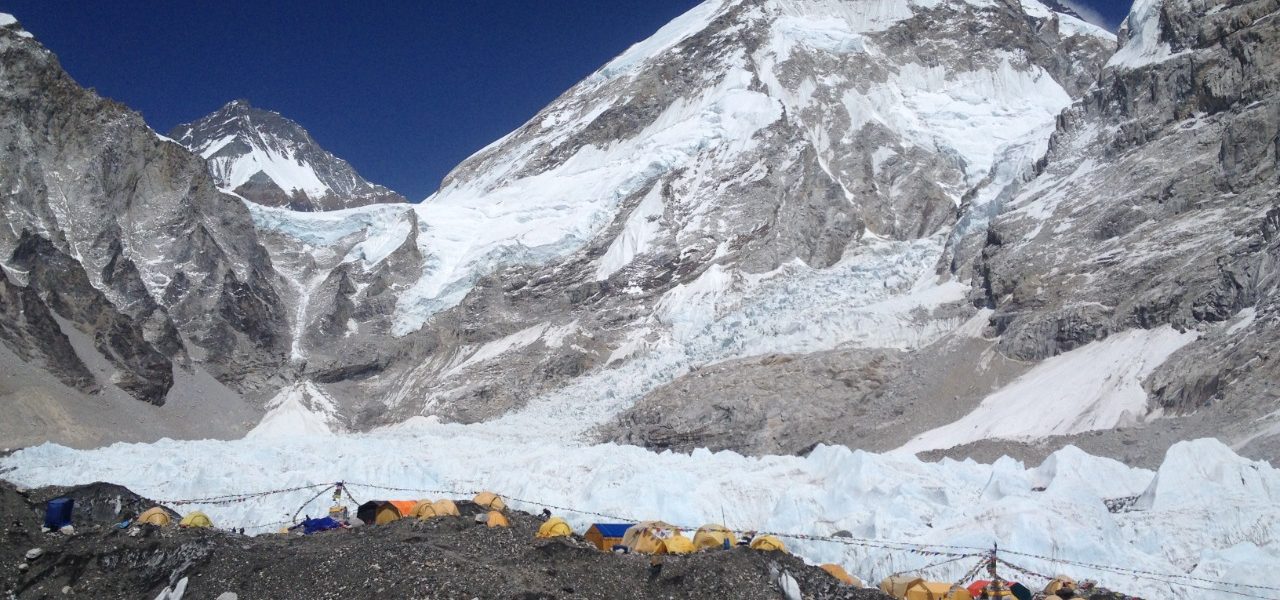
The present-day Everest Base Camp in Nepal sits at approximately 5,364 meters (17,598 feet) above sea level. It is the famous destination reached by trekkers following the classic Everest Base Camp Trek.
The route generally passes through iconic Khumbu settlements such as Lukla, Namche Bazaar, Tengboche, Dingboche, Lobuche, and Gorak Shep before reaching Everest Base Camp.
During the main climbing seasons, the base camp becomes a temporary mountaineering settlement filled with expedition tents, climbing equipment, communications facilities, and support crews.
Trekkers normally do not spend the night at Everest Base Camp. Instead, they return to Gorak Shep, where accommodation is available.
The modern Everest Base Camp is therefore both a major mountaineering location and one of Nepal’s most famous trekking destinations.
Old vs New Everest Base Camp
The difference between the historical expedition areas and the modern Everest Base Camp is not simply a matter of location. The overall experience is different as well.
| Feature | Historical/Old Expedition Areas | Present Everest Base Camp |
|---|---|---|
| Main attraction | Mountaineering history and remote experience | Everest Base Camp Trek and modern expeditions |
| Accessibility | More difficult and route-dependent | Accessible through the established trekking route |
| Experience | More technical and adventurous | Suitable for trekkers with proper acclimatization |
| Infrastructure | Limited | Seasonal expedition infrastructure nearby |
| Historical significance | Closely connected with early Everest expeditions | Center of modern Everest expeditions |
| Visitors | Relatively few | Thousands of trekkers and climbers visit the region |
For most travelers, the present Everest Base Camp is the appropriate destination. Historical expedition locations are more suitable for experienced adventurers traveling with qualified local support.
Everest Base Camp Trek 12 Days
The Everest Base Camp Trek 12 Days is one of the most popular Himalayan adventures in Nepal. It takes trekkers through the heart of the Khumbu region and eventually to the base of the world’s highest mountain.
A typical journey includes famous destinations such as Namche Bazaar, Tengboche, Dingboche, Lobuche, Gorak Shep, and Everest Base Camp.
The route is not simply a walk toward a mountain. It is a journey through Sherpa villages, Buddhist monasteries, suspension bridges, high-altitude valleys, glaciers, and spectacular Himalayan scenery.
Altitude acclimatization is an important part of the trek. Although the standard itinerary may be completed in around 12 days depending on the exact itinerary and transportation arrangements, trekkers should never underestimate the physical demands of the high-altitude environment.
How Has the Everest Base Camp Trek Changed?
The Everest Base Camp Trek has changed considerably compared with the experience of earlier travelers and mountaineering expeditions.
Today, trekkers can find:
- Established trekking trails
- Tea houses and lodges
- Better communication facilities
- Improved transportation access
- Internet and mobile connectivity in many locations
- Experienced trekking agencies and guides
- More organized rescue and support services
- A much larger tourism infrastructure
Decades ago, traveling through the Khumbu was considerably more remote and logistically demanding.
The development of tourism has made the region more accessible, but it has also created new environmental and cultural challenges. Climate change, glacier retreat, waste management, increasing visitor numbers, and changing mountain conditions are important issues for the future of Everest tourism.
Is There a Plan to Shift Everest Base Camp Again?
There have been discussions over the years about the safety and sustainability of the current Everest Base Camp location, particularly because the Khumbu Glacier is constantly moving and changing.
Any potential relocation would involve complex considerations related to mountaineering safety, glacier conditions, logistics, environmental impact, and the experience of trekkers and climbers.
For trekkers, the location matters because reaching Everest Base Camp is the symbolic culmination of the journey.
After walking for many days through the Khumbu, standing at the base of Mount Everest is an emotional and memorable moment. Moving the destination significantly away from the traditional Everest Base Camp area could change the character of the trek.
For this reason, any decision about relocating the camp needs to balance safety with the historical and experiential importance of the destination.
Can You Visit the Old Everest Base Camp?
Travelers interested in historical Everest expedition locations may be able to arrange specialized trips depending on the exact location, current conditions, regulations, and technical requirements.
This is not a standard Everest Base Camp Trek extension. Some areas around glaciers and high-altitude terrain can be dangerous, and conditions can change rapidly.
Depending on the route, travelers may need:
- An experienced mountain guide
- Appropriate high-altitude equipment
- Technical equipment where required
- Proper acclimatization
- Route and weather assessment
- Additional time in the itinerary
- Appropriate permits or permissions where applicable
Therefore, anyone interested in visiting historical expedition areas should arrange the trip with an experienced local trekking or mountaineering operator rather than attempting to find the route independently.
For travelers who are fascinated by Everest history, such an experience can provide a very different perspective on the mountain and the expeditions that shaped its history.
Is Visiting the Old Everest Base Camp Worth It?
For mountaineering enthusiasts and travelers interested in Everest history, exploring historical expedition areas can be highly rewarding.
Imagine walking through landscapes associated with the early Everest expeditions and learning about the challenges faced by climbers before modern trekking infrastructure existed.
The experience is particularly appealing to travelers who want to go beyond the standard tourist itinerary.
However, it is important to distinguish between historical exploration and a standard trekking excursion. The latter follows an established route to the present Everest Base Camp, while specialized trips may involve more difficult terrain and additional safety considerations.
Does the Everest Base Camp Stone Move?
One of the interesting facts about the modern Everest Base Camp is that its famous stone and surrounding landscape are not completely fixed. The base camp sits on the Khumbu Glacier, which is constantly moving and changing. As a result, the location and appearance of the famous Everest Base Camp stone can vary slightly from season to season. Snowfall, melting ice, glacier movement, and changing terrain can all influence the area. If you are curious about why the Everest Base Camp stone moves and whether it is the same stone seen in older photographs, read our detailed guide on Is the Everest Base Camp Stone Moving? and discover more fascinating facts about Everest Base Camp.
Does Everest Have Another Base Camp?
Yes. Mount Everest has base camps on both the Nepalese southern side and the Tibetan northern side.
Everest Base Camp, Nepal
The southern Everest Base Camp is located in Nepal at approximately 5,364 meters. It is the destination of the famous Everest Base Camp Trek.
Trekkers generally fly to Lukla or use alternative approaches, then travel through the Khumbu Valley before reaching Namche Bazaar, Tengboche, Dingboche, Lobuche, Gorak Shep, and finally Everest Base Camp.
Everest Base Camp, Tibet
The northern Everest Base Camp is on the Tibetan side of Mount Everest, in China, at approximately 5,200 meters.
Unlike the Nepalese trekking route, the Tibetan side has historically offered much greater road access toward the base camp area. Travelers typically reach Tibet through an organized journey and travel overland toward Everest.
The Tibetan route provides a very different experience, with high-altitude landscapes, Tibetan cultural sites, and panoramic views of Everest.
Access regulations and travel requirements on the Tibetan side can change, so travelers should check the current requirements before planning their journey.
Best Everest Base Camp Trek Guide
Choosing the right itinerary is one of the most important parts of preparing for an Everest adventure.
A good Everest Base Camp Trek Guide should cover:
- Best seasons for trekking
- Trekking route and itinerary
- Altitude and acclimatization
- Accommodation
- Food and drinking water
- Permits
- Packing requirements
- Guide and porter services
- Travel insurance
- Weather and mountain conditions
- Emergency and evacuation planning
- Physical preparation
The standard Everest Base Camp Trek remains the best option for most first-time visitors to the region.
Travelers with previous high-altitude trekking experience, a strong interest in mountaineering history, or a desire for an off-the-beaten-path adventure can discuss specialized options with an experienced trekking operator.
Annapurna Circuit vs Annapurna Base Camp Trek
Everest is not the only major trekking destination in Nepal.
The Annapurna Circuit vs Annapurna Base Camp Trek comparison is useful for travelers deciding between two of Nepal’s most famous Himalayan adventures.
Annapurna Circuit is known for its diverse landscapes, long-distance trekking experience, traditional villages, and high mountain passes.
The Annapurna Base Camp Trek, on the other hand, takes trekkers directly into the spectacular Annapurna Sanctuary and offers a relatively compact Himalayan adventure surrounded by impressive peaks.
Both routes provide a very different experience from Everest Base Camp.
If you are interested in how trekking in Nepal has developed and how modern infrastructure has changed Himalayan journeys, comparing these destinations with the Everest region can help you choose the right trek.
Gokyo Ri vs Kala Patthar Trek
Another excellent comparison in the Everest region is Gokyo Ri vs Kala Patthar Trek.
Gokyo Ri offers spectacular views across the Gokyo Valley, including Everest and several surrounding Himalayan peaks. The journey also provides an opportunity to explore the beautiful Gokyo Lakes and a less direct route through the Everest region.
Kala Patthar is famous for its close panoramic views of Mount Everest and the surrounding peaks. It is commonly included in Everest Base Camp itineraries and is one of the best viewpoints for seeing Everest from the Nepal side.
For travelers focused specifically on Everest views, Kala Patthar is a popular choice. Those looking for a broader adventure involving the Gokyo Valley may prefer Gokyo Ri.
Manaslu Expedition
For travelers interested in taking their Himalayan adventure beyond trekking, the Manaslu Expedition is another remarkable mountaineering experience in Nepal. Mount Manaslu, standing at 8,163 meters, is one of the world’s eight-thousanders and offers a challenging expedition through the remote Manaslu region. Compared with the Everest Base Camp Trek, a Manaslu Expedition requires significantly more technical preparation, acclimatization, climbing experience, and specialized equipment.
The journey combines high-altitude mountaineering with the spectacular landscapes and cultural richness of the Manaslu region. For experienced climbers looking for a demanding Himalayan expedition away from the busier Everest trails, Manaslu provides an excellent alternative. If you are interested in exploring Nepal’s major mountain expeditions, learn more about our Manaslu Expedition and its route, itinerary, climbing requirements, and preparation.
What About a Test Trip?
If Test Trip is only a temporary or testing page, there is no strong reason to add an internal link from this article.
Internal links work best when they provide genuine value to the reader. A relevant Everest, Khumbu, Nepal trekking, or mountaineering article would be a much more natural destination for an internal link to this Old vs New Everest Base Camp guide.
Are You Already in Nepal?
If you are already in Kathmandu or Pokhara and are looking to hire a guide or porter or arrange a trekking or tour package, you can directly contact an expert via WhatsApp at +9779841146306.
You can also visit our office:
Himalaya View Treks & Expeditions
Kaldhara Marg, Kathmandu 44600
In front of the Kathmandu Sport Climbing Center
1st-floor building
Our experienced travel planners can help you choose an appropriate Everest, Annapurna, or other Nepal trekking itinerary according to your time, experience, interests, and budget.
Final Thoughts: Old vs New Everest Base Camp
The story of Everest Base Camp is closely connected with the history and evolution of Himalayan mountaineering.
The historical expedition areas remind us of the difficult journeys undertaken by early Everest explorers and climbers. The present Everest Base Camp represents the modern era of mountaineering and trekking, attracting thousands of visitors during the trekking and climbing seasons.
For most trekkers, the modern Everest Base Camp remains the ideal destination. It offers the classic Himalayan trekking experience, spectacular mountain scenery, Sherpa culture, and the unforgettable feeling of finally standing at the base of Mount Everest.
For experienced adventurers and mountaineering enthusiasts, exploring historical expedition locations can provide an entirely different perspective.
Whether you choose the classic Everest Base Camp Trek, a Gokyo and Everest combination, or a specialized historical expedition experience, the Everest region offers an unforgettable journey.
Trek differently. Explore responsibly. Experience Everest.