Trip overview
Everest Base Camp Trek with Island Peak Climbing Overview
The Everest Base Camp Trek with Island Peak Climbing is an exciting Himalayan adventure. It combines a classic trek to Everest Base Camp with the challenge of climbing Island Peak. During the Everest Base Camp with Island Peak Climbing, you will enjoy stunning mountain views, Sherpa culture, and an exciting summit climb. Adventure begins in Kathmandu. After preparing for the trek, you take a short and scenic flight to Lukla. Lukla is a small mountain town surrounded by beautiful Himalayan peaks.
The trek starts from Lukla. The trail passes through green forests, Sherpa villages, rivers, and waterfalls. You will also experience the local culture as you walk through the Khumbu region.
As you continue higher, the landscape changes. Green forests give way to rocky trails, glaciers, and snow-covered mountains. You will pass through Namche Bazaar and Tengboche. Both places are famous for their mountain views and Buddhist culture.
The trail then leads toward Beautiful Everest Base Camp. Reaching Everest Base Camp is one of the main highlights of the journey. At Everest Base Camp, you can enjoy views of the surrounding mountains and the Khumbu Glacier. The area is also the starting point for many Everest expeditions.
After completing the Everest Base Camp section, the adventure continues toward Island Peak. Island Peak, also known as Imja Tse, stands at 6,189 meters.
The Island Peak climb adds a new challenge to the trek. You will need good fitness, proper preparation, and basic climbing skills. Our climbing guides will provide technical support and safety guidance.
From the Island Peak summit, you can enjoy impressive views of Everest, Lhotse, Makalu, Ama Dablam, and other Himalayan peaks.
14 Days EBC Plus Island Peak Climbing
The 14-day Everest Base Camp and Island Peak Climbing adventure combines trekking and mountaineering in one journey. Island Peak reaches 6,189 meters. The climb requires physical fitness, good preparation, and basic technical climbing skills.
Before the summit attempt, you will receive climbing guidance and training from your experienced climbing team. You will also have time to prepare your equipment and adjust to the high altitude. The summit climb is challenging but rewarding. Standing on top of Island Peak gives you a wide view of the Himalayan mountains.
After the climb, you return through the beautiful Khumbu region. You retrace parts of the trail toward Lukla before taking a flight back to Kathmandu.
You will return home with memories of high mountains, Sherpa hospitality, and an unforgettable Himalayan adventure. For more information and planning ideas, check our Everest Base Camp travel guide 2026.
The Everest Base Camp Trek and Island Peak climbing is more than a simple trek. It combines mountain walking, high-altitude adventure, and peak climbing. It is a great choice for travelers who want to experience Everest Base Camp and climb a Himalayan peak on the same trip.
Island Peak Climbing from Chhukung – 2 Days Himalayan Summit Adventure
We organize Island Peak climbing from Chhukung in 2 days for trekkers who want to add a summit experience to their Everest Base Camp trek. Island Peak, also known as Imja Tse, stands at 6,189 meters. It is one of Nepal’s most popular trekking peaks. The climb is a good option for trekkers who want to try high-altitude climbing in the Everest region.
The climb starts from Chhukung. Our experienced climbing guides will support you throughout the journey. They will provide climbing preparation, safety advice, and technical support.
The route offers excellent views of Everest, Lhotse, Nuptse, Ama Dablam, Makalu, and other Himalayan peaks. Adding an Island Peak climbing adventure to your Everest Base Camp itinerary lets you enjoy both trekking and climbing. It is a good choice for adventure seekers who want a challenging and rewarding Himalayan experience.
Lobuche Peak Climbing from Lobuche – 3 Days Peak Climbing Extension
We organize Lobuche Peak climbing from Lobuche in 3 days for trekkers who want to add a peak climb to their Everest Base Camp journey. Lobuche East Peak stands at 6,119 meters. It is one of Nepal’s popular trekking peaks. The climb starts from Lobuche village. The route follows the Everest Base Camp trail before continuing toward the peak. Our professional climbing guides provide climbing support and safety guidance throughout the journey.
From the summit, you can enjoy spectacular views of Mount Everest, Lhotse, Nuptse, Pumori, Ama Dablam, and the surrounding Khumbu mountains. Combining Lobuche Peak climbing with the Everest Base Camp Trek is a great choice for travelers who want more adventure. This 3-day climbing extension adds a new challenge to your Nepal trekking experience.
Alternative: Mera Peak Climbing from Khare After Mera La Trek
If you are planning the Mera La Trek and want to add a summit climb, Mera Peak Climbing from Khare is an excellent option. Mera Peak stands at 6,476 meters. It is the highest trekking peak in Nepal.
The Mera La Trek takes you through the remote Hinku Valley. The route passes through peaceful trails, Sherpa villages, forests, and beautiful mountain landscapes. After reaching Khare, you can prepare for the Mera Peak climb. Your preparation includes acclimatization, climbing practice, and equipment checks. From Khare, the route continues toward Mera High Camp and then to the summit.
Mera Peak offers a rewarding climbing experience. The route includes glacier walking, snow slopes, and basic climbing sections. An experienced climbing guide will support you throughout the climb. From the summit, you can enjoy views of Everest, Lhotse, Makalu, Cho Oyu, Kanchenjunga, and many other Himalayan peaks.
For trekkers who want to turn their Mera La adventure into a summit expedition, Mera Peak Climbing from Khare is an excellent choice. It combines a beautiful high-altitude trek with an exciting Himalayan climbing experience.
Why Choose Himalaya View Treks for Everest Base Camp Trek with Island Peak Climbing?
Himalaya View Treks is a trusted local trekking and climbing company in Nepal. We specialize in Everest region treks and Himalayan peak climbing. Our Everest Base Camp Trek with Island Peak Climbing combines the famous Everest Base Camp journey with the exciting climb of Island Peak at 6,189 meters.
We provide experienced, government-licensed trekking guides and professional climbing Sherpas. Our team knows the Everest region well. We understand high-altitude conditions and the needs of climbers. We focus on safety, proper acclimatization, and a steady pace throughout the journey.
When you choose Himalaya View Treks, you receive:
- Experienced local guides and climbing Sherpas
- A well-planned itinerary with proper acclimatization
- Help with trekking and climbing permits
- Quality accommodation during the trek
- Fresh and hygienic meals
- Climbing training before the summit attempt
- Help with climbing equipment and logistics
- Flexible itineraries based on your experience and schedule
- 24/7 local support throughout your Nepal adventure
As a local Nepal-based company, we understand the Everest region and its challenges. Our team supports you from your arrival in Kathmandu until your departure.
Whether this is your first Himalayan climbing experience or an extension of your Everest Base Camp Trek, Himalaya View Treks aims to provide a safe, well-organized, and memorable adventure.
Short Itinerary
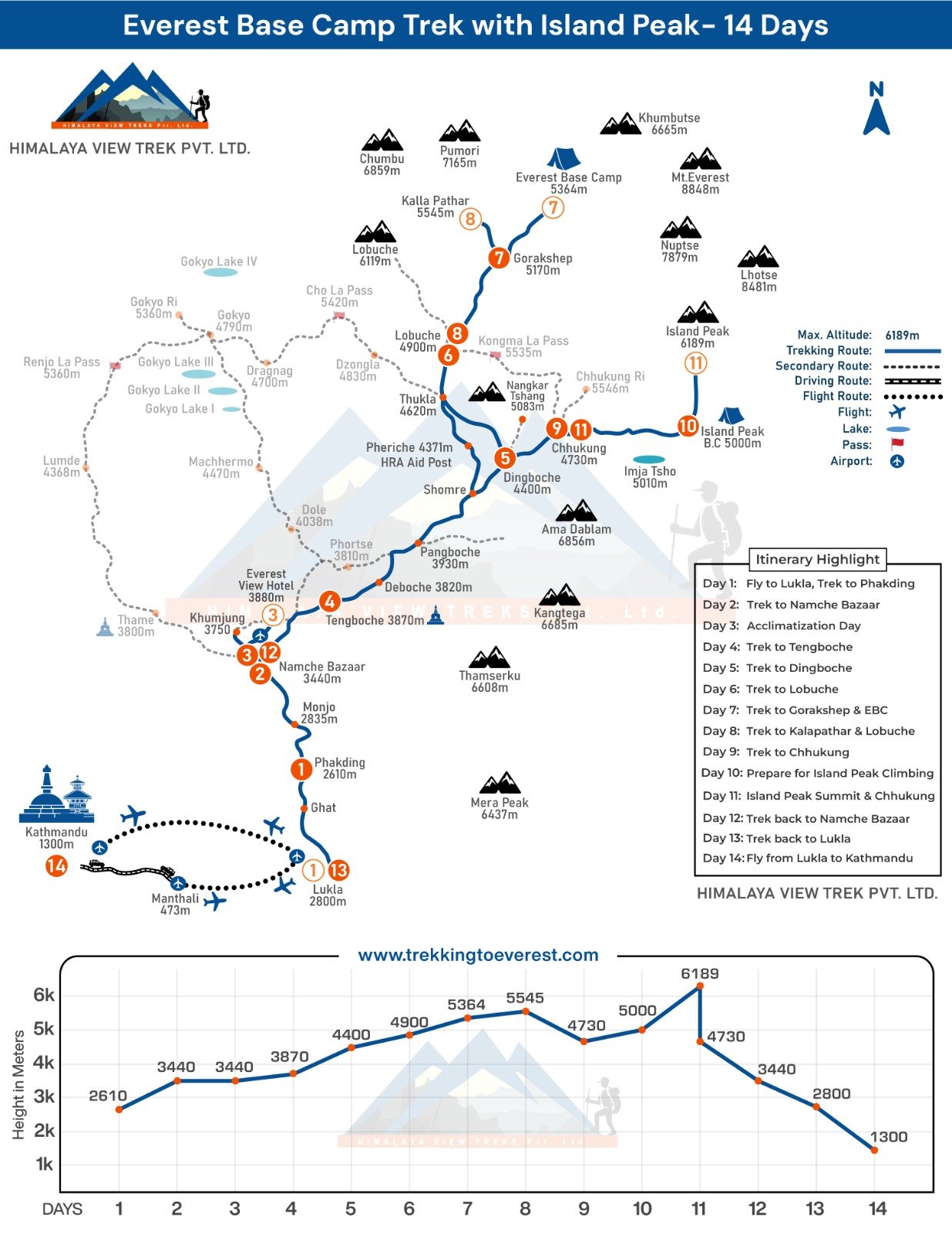
Everest Base Camp Trek with Island Peak Climbing Itinerary - 14 Days
Day 01: Fly to Lukla and then trek to Phakding, walking distance of 7.6 km (3–4 hours), 2,610 meters / 8,563 ft.
Day 02: Phakding to Namche Bazaar, walking distance is 12.3 km (6–7 hours), 3,440 m / 11,283 ft.
Day 03: Acclimatization Day, hike to Everest View Hotel at 3,880 m / 12,729 ft, and then trek back to Namche Bazaar.
Day 04: Namche Bazaar to Tengboche, walking distance 9.2 km (6–7 hours), 3,870 m / 12,684 ft.
Day 05: Tengboche to Dingboche, walking distance of 10.7 km (6 hours), 4,400 m / 14,435 ft.
Day 06: Dingboche to Lobuche, walking distance of 12 km (6–7 hours), 4,900 m / 16,076 ft.
Day 07: Lobuche to Gorakshep and then continue to Everest Base Camp, walking distance of approximately 12 km (7–8 hours), 5,364 m / 17,598 ft.
Day 08: Gorakshep to Kala Patthar and then trek to Chhukung, walking distance and walking hours according to the detailed itinerary, maximum altitude 5,545 m / 18,192 ft.
Day 09: Chhukung to Kongma La Pass and then trek to Chhukung, walking distance and walking hours according to the detailed itinerary, maximum altitude 5,535 m / 18,159 ft.
Day 10: Prepare for Island Peak Climbing, with climbing preparation and training before the summit attempt.
Day 11: Summit Island Peak at 6,189 m / 20,305 ft and return to Chhukung.
Day 12: Chhukung to Namche Bazaar, walking distance of 14.2 km (5–6 hours), 3,440 m / 11,283 ft.
Day 13: Namche Bazaar to Lukla, walking distance of 13.5 km (5–6 hours), 2,800 m / 9,186 ft.
Day 14: Fly from Lukla to Kathmandu, flight time approximately 30–40 minutes, Kathmandu at 1,300 m / 4,265 ft.
Detailed Itinerary
Day 01: Journey Commences - Fly to Lukla and Trek to Phakding
Get up early to go on an incredible journey to Lukla, a little airport tucked away among the tall Himalayan peaks. Get ready for an amazing journey with breathtaking views of the untamed landscape below.
Once you reach Lukla, the entry point to the Everest region, start walking in the direction of Phakding. Travel on winding trails through the mountains, over suspension bridges that are covered in vibrant prayer flags that billow in the alpine wind.
Take in the sights and sounds of local life as you hike through charming Sherpa villages, where traditional stone houses and fluttering prayer wheels can be found all over the place.
Trekking for about 3–4 hours will get you to Phakding, which is 2,860 meters (9,184 feet) above sea level. Take in the peaceful surroundings as you settle into your teahouse lodging and enjoy your first night in the Himalayas.
Day 02: Ascend to the Enigmatic Namche Bazaar
After a filling breakfast, set out on the difficult journey to Namche Bazaar, the busy Sherpa capital known for its colorful markets and breathtaking mountain scenery.
Trek 7.4 kilometers (around 5–6 hours) at a moderate pace, along meandering trails that provide views of snow-capped summits poking through the clouds.
Take a moment to catch your breath as you ascend and take in the expansive views of the Khumbu region, featuring towering peaks like Thamserku and KongdeRi.
Reach 3,440 meters (11,283 feet) above sea level at Namche Bazaar and take in the vibrant atmosphere of this alpine town. Discover the vibrant streets dotted with bakeries, souvenir shops, and cafes. Talk to both residents and other hikers.
Day 03: Acclimatization - Hike to Everest View Hotel
Today is all about acclimatization, which is an essential part of hiking at high altitudes to make sure your body gets used to the lower oxygen levels over time.
Take a breathtaking climb to the Everest View Hotel, which is positioned at 3,880 meters (12,700 feet) above sea level and provides unmatched views of AmaDablam, Lhotse, and Everest.
Returning to Namche Bazaar by foot, savor the moment to take in the stunning panorama and the utter magnificence of the surrounding peaks.
For the rest of the day, unwind and continue to acclimate. You may enjoy a steaming cup of the local tea or take your time exploring the nearby trails.
Day 04: Trek to Tengboche - Home to a Sacred Monastery
Continue walking, saying goodbye to Namche Bazaar and heading toward Tengboche, a peaceful settlement known for its historic monastery tucked away in a grove of rhododendron trees.
Over the course of six hours, hike 5.9 km, with a moderate ascent through rocky terrain and verdant alpine meadows bursting with vibrant wildflowers.
Reach the 3,870-meter (12,684-foot) high Tengboche and explore the famous Tengboche Monastery, one of the most venerated Buddhist monasteries in the Everest region.
Before turning in for the night in the charming village environs, take in the spiritual atmosphere of the monastery, which is encircled by fluttering prayer flags and the melodic chants of Buddhist monks.
Day 05: Journey to Dingboche - Gateway to Everest Base Camp
Put on your hiking boots and head to Dingboche, a charming settlement that is the starting point for the Everest Base Camp journey and is tucked away beneath the Himalayan peaks.
Walk about 9.1 kilometers in about 6 hours, climbing gradually on steep paths and passing through the lush ImjaKhola valley.
As you ascend, take note of the changing scenery as you pass through alpine vegetation and into desolate areas broken up by peaks and glacial moraines.
Reaching Dingboche at 4,400 meters (14,435 feet) above sea level, take in the breathtaking vistas of Island Peak and AmaDablam looming large over the horizon.
Enjoy a nice lunch and a pleasant evening in your teahouse as you get ready for the difficulties that lie ahead.
Day 06: Trek to Lobuche - Amidst the Giants
Set out on an exciting hike to Lobuche, a tiny community tucked away in the untamed Himalayas that is an essential stopover the route to Everest Base Camp.
Walk about 10 kilometers in 6–7 hours, passing through rocky areas and glacier moraines as you get higher up.
Experience the thrill of trekking amongst tall peaks, with distant vistas of Nuptse, Pumori, and Khumbutse looming enormous.
At 4,900 meters (16,076 feet) above sea level, you will reach Lobuche. Celebrate your achievement and spend the night in your lodging.
Spend the evening adjusting to the altitude even more and getting ready for the hike to Gorakshep, the last destination before arriving at Everest Base Camp, the following day.
Day 07: Venture to Gorakshep and Everest Base Camp
Prepare yourself for an incredible journey to Gorakshep, the final town before arriving at the legendary Everest Base Camp, which is surrounded by the untamed landscape of the Khumbu Glacier.
Hike 4 kilometers in 6-8 hours, passing over frozen moraines and steep pathways as you climb higher up.
As you near Gorakshep, 5,180 meters (16,994 feet) above sea level, experience the exhilaration of approaching Everest Base Camp for the first time.
Proceed to Everest Base Camp at 5,364 meters (17,598 feet) above sea level, traversing the enormous Khumbu Glacier and taking in the strange views.
After spending some time visiting Everest Base Camp and snapping pictures among the vibrant tents and prayer flags, go back the way you came.
Day 08: Summit Kalapatthar - A Panoramic Vista of Everest
A thrilling walk to Kalapatthar, a well-known viewpoint with unimpeded views of Everest and the surrounding Himalayan peaks, awaits you if you get up early.
Hike for around 3.9 km over two to three hours, climbing sharply along rocky paths to 5,545 meters (18,187 feet) in altitude.
Watch as Everest rises, bathing the snow-capped peaks in a golden glow and bathing the surrounding area in an amazing exhibition of the grandeur of nature.
Before returning to Lobuche for a well-earned break, take a moment to take in the breathtaking views and make memories that will last a lifetime.
Day 09: Traverse Kongma-La Pass to Chhukung
Set off on a strenuous hike over Kongma-La Pass, which is 5,535 meters (18,154 feet) high and one of the highest mountain crossings in the Everest region.
Trek for around seven hours, taking in expansive vistas of the surrounding Himalayan peaks while negotiating difficult ascents and descents on rocky paths.
As you reach the top of Kongma-La Pass and are encircled by massive glaciers that spread for miles, you will feel a sense of accomplishment.
Travel down to the sleepy village of Chhukung, which is at 4,730 meters (15,518 feet) above sea level. Spend the night at your accommodations.
Day 10: Prepare for Island Peak Expedition
Your Island Peak adventure, one of the most famous climbing excursions in the Everest region, begins today.
Get a comprehensive briefing on the forthcoming climb, including safety protocols, equipment inspections, and climbing tactics, when you meet with your knowledgeable Climbing Sherpa in Chhukung.
After making sure you have all you need for a successful summit bid, prepare your supplies and equipment for the ascent and then relax and recover for the demanding days that lie ahead.
Day 11: Summit Island Peak and Return to Chhukung
Get up early and start your exciting journey to Island Peak, a strenuous climb that, at 6,189 meters (20,305 feet) in altitude, provides unmatched vistas of the Everest region.
With the help of your Climbing Sherpa, ascend and traverse icy slopes and sheer rock faces while using climbing skills to get over tricky technical obstacles.
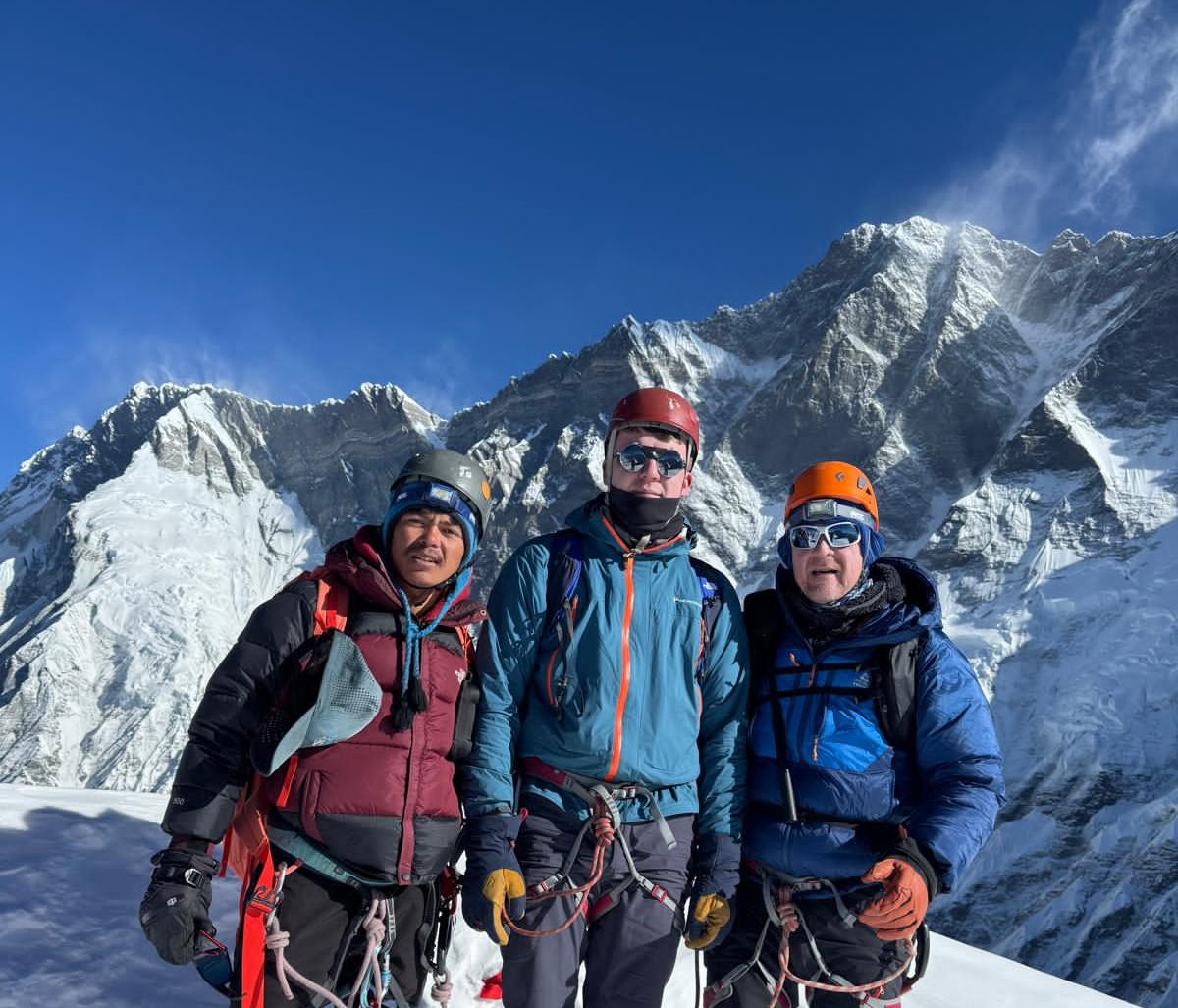
As you reach the summit of Island Peak, celebrate your accomplishment and take in the expansive views of Makalu, Lhotse, and Everest that spread out to the horizon.
With your fellow climbers, celebrate your successful summit bid as you gently descend back to base camp. Then, head back to Chhukung to recuperate and digest the amazing adventure.
Day 12: Trek Back to Namche Bazaar
Say goodbye to the majestic mountains of the Himalayas as you start downhill toward Namche Bazaar, following the well-known paths of the Everest region once more.
Hike 14.2 km in 5–6 hours, descending through scenic valleys and alpine woods with sporadic views of Himalayan wildlife and soaring eagles.
Reminisce on the life-changing experiences exchanged along the way as you travel by charming Sherpa settlements and vibrant prayer flags flapping in the mountain breeze.
After your amazing journey is over, return to Namche Bazaar and take in the vibrant ambiance of the bustling mountain town while treating yourself to a well-earned dinner and hot shower.
Day 13: Descend to Lukla - Homeward Bound
Ascend farther toward Lukla, the last stop on your journey across the Himalayas, saying goodbye to the untamed splendor and high-altitude scenery of the Everest region.
Walk about 13.5 kilometers in 5–6 hours, retracing your route over well-trod paths dotted with rhododendron trees and tumbling waterfalls. You may come across amiable Sherpa villagers on occasion.
Return to 2,800 meters (9,100 feet) above sea level at Lukla, and bask in your sense of achievement while thinking back on the experiences and obstacles you've faced.
In Lukla, spend the evening toasting to new friendships made in the splendor of the Himalayas while sharing a festive dinner with your fellow hikers.
Day 14: Farewell to the Himalayas - Return to Kathmandu
Take an early morning flight to Kathmandu from Lukla, saying a fond farewell to the rough terrain and tall peaks of the Everest region.
From the comfort of your aircraft, soar above the clouds and take in the breathtaking sights of the Himalayas while thinking back on the amazing journey you've been on for the previous two weeks.
After landing in Kathmandu, the energetic capital of Nepal, head to your accommodation to rest and recuperate from the thrilling journey.
For the rest of the day, take in the vibrant streets of Kathmandu, go souvenir shopping, or just kick back and remember the amazing moments from your Himalayan adventure.
Included
- Airport pickup and drop as per the client’s arrival and departure time
- Hotel- domestic airport- hotel by car/ van, depending on group sizes
- Domestic flights (Kathmandu - Lukla - Kathmandu) tickets including airport taxes
- All meals (Breakfast, lunch, and dinner) during your Everest base camp Trek plus Island Peak Climbing
- 13 nights of Hotel Accommodation during the EBC Plus Island Peak Trek
- Government licensed holder, fluent English Speaking, Familiar HVT Leader guide
- Climbing Sherpa for Island Peak Climb
- One assistant guide if the Group size is more than 10 trekkers)
- Strong local Porters for Carry trekker’s luggage one porter every 2 trekkers
- Guide and porter wages including their meals, accommodation, and Salary
- Staff insurance including medication coverage
- Guide and Assistance both ways Lukla flight Ticket
- Equipment for the Company staff
- Water purification drops or tablets for safe drinking water
- Sagarmatha National Park entry permit fee
- Island Peak climbing permit
- Khumbu Pasang Lhamu Rural Municipality Permit fees
- Seasonal fresh fruits every day during your Everest Base Camp trek
- Oximeter to measure Pulse and oxygen level
- Company T-shirt as a Souvenirs, and duffel bag if needed
- Local government, taxes, including official Service Charge
- Trip completion Certificate
Not Included
- Hotel accommodation and meals In Kathmandu
- Personal expenses (shopping, snacks, boil bottled water, hot (tea, coffee) and cold drinks, hot shower, alcohol, Wi-Fi, telephone call, battery charge fee during the Everest base camp Trek)
- Personal clothing, trekking and Climbing gear
- Personal travel insurance including evacuation coverage (compulsory) up to 6000m)
- Additional costs if delays flights and outside the itinerary
- Tips for Guide, Sherpa and Porters at the end of the treks
Useful Info
Useful Information for Everest Base Camp Trek with Island Peak Climbing
Physical Fitness and Preparation
The Everest Base Camp Trek with Island Peak Climbing requires a good level of physical fitness, stamina, and mental preparation. The journey includes long walking days, steep uphill climbs, and high-altitude trekking above 5,000 meters.
You should prepare several weeks before the trip with regular hiking, strength training, and cardiovascular exercises such as running, cycling, or swimming. Previous trekking experience is helpful, but determination and proper preparation play an important role in completing this adventure successfully.
Altitude Sickness and Acclimatization
Trekking and climbing at high altitudes involve the risk of altitude sickness, also known as Acute Mountain Sickness (AMS). As the trek reaches Everest Base Camp and Island Peak summit at 6,189 meters, your body needs enough time to adjust to the changing altitude.
Common symptoms of altitude sickness include:
- Headache
- Nausea
- Dizziness
- Loss of appetite
- Shortness of breath
To reduce altitude-related risks, the itinerary includes proper acclimatization days in the Everest region. Walk at a comfortable pace, drink plenty of water, eat nutritious meals, and inform your guide immediately if you experience any symptoms.
Island Peak Climbing Experience and Equipment
Island Peak is a technical trekking peak that requires basic mountaineering skills. Climbers should learn how to use essential climbing equipment, including crampons, an ice axe, climbing harness, helmet, ropes, and ascenders.
Our experienced climbing guides provide basic climbing training before the summit attempt and explain how to use the equipment safely. You can bring your own climbing gear or rent necessary equipment in Kathmandu.
Recommended personal climbing and trekking equipment includes:
- Mountaineering boots
- Crampons
- Ice axe
- Climbing harness
- Helmet
- Warm insulated clothing
- Waterproof jacket and pants
- Gloves and sunglasses
Best Time for Everest Base Camp with Island Peak Climbing
The best seasons for this adventure are spring (March to May) and autumn (September to November).
Spring offers stable weather, warmer temperatures, and beautiful views of Himalayan peaks. Autumn provides clear skies, excellent visibility, and favorable climbing conditions after the monsoon season.
Winter climbing is possible for experienced climbers, but cold temperatures and stronger winds make the climb more challenging.
Accommodation and Meals
During the trek, you stay in comfortable teahouses and lodges operated by local Sherpa families. Rooms usually include twin beds with basic facilities.
During the Island Peak climbing section, our team arranges camping facilities with tents, kitchen support, and necessary climbing logistics. We provide nutritious meals throughout the journey to maintain your energy at high altitude.
Travel Insurance
Travel insurance is mandatory for the Everest Base Camp Trek with Island Peak Climbing. Your insurance policy should cover:
- High-altitude trekking and climbing up to 6,200 meters
- Emergency helicopter evacuation
- Medical treatment
- Trip cancellation or interruption
Make sure your insurance covers peak climbing activities, as some standard travel insurance policies do not include mountaineering.
Communication and Electricity
Mobile network coverage and internet access are available in many villages along the Everest Base Camp route, although the connection becomes limited at higher elevations.
Most teahouses provide charging facilities for electronic devices at an additional cost. Carrying a power bank is recommended, especially during the Island Peak climbing section.
Responsible Trekking Practices
The Everest region is a fragile Himalayan environment and home to the Sherpa community. We encourage responsible travel practices throughout the journey.
Trekkers should:
- Respect local culture and traditions
- Avoid unnecessary plastic waste
- Follow designated trails
- Support local communities
- Protect the natural environment
With proper preparation, responsible travel, and professional guidance, the Everest Base Camp Trek with Island Peak Climbing becomes a safe and unforgettable Himalayan adventure.
- Guide and Porter: For safety and assistance, it is strongly advised to hire a local guide and porter. While porters ease the strain of carrying large bags, allowing trekkers to concentrate on the journey, guides offer insightful knowledge of the terrain, culture, and weather.
- Permits: In order to access Sagarmatha National Park and ascend Island Peak, trekkers must have permits. These permits can be acquired in Lukla upon arrival or through a trekking agency that is registered in Kathmandu. Obtaining all required permits is a must before starting the hike.
- Weather: The Himalayas have erratic weather, with seasons and altitude having a big impact on temperature fluctuations. The optimum seasons to hike to Everest Base Camp and climb Island Peak are from March to May in the spring and September to November in the fall, when visibility is good and the weather is consistent.
- Accommodations: Along the Everest Base Camp trekking path, teahouses and lodges offer simple yet cozy lodging as well as meals. Since there are fewer lodging options at higher altitudes, it is best to make reservations well in advance during the busiest trekking seasons.
- Packing essentials: You should bring warm clothes, a sleeping bag, sunscreen, sunglasses, a first aid kit, and tablets that purify water in addition to good hiking boots. It's important to travel light while being well-prepared for shifting weather patterns and uneven terrain.
- Nutrition and Hydration: Sustaining energy levels and avoiding altitude sickness require eating a healthy diet and staying hydrated. To sustain energy, hikers should drink a lot of water, abstain from caffeine and alcohol, and eat foods high in carbohydrates.
- Trekking responsibly means cutting down on waste, honoring regional traditions, and helping out the community by managing tourism in an ethical manner. For the enjoyment of future generations, leave the environment exactly as you found it and leave no trace behind.
Trekkers can have a safe, pleasurable, and fulfilling journey to Everest Base Camp and Island Peak by taking into account these helpful pieces of information and properly prepare for the adventure.
Trip Map